The Economics of Relay Testing: Outage Windows, Rework, and Evidence Quality
A measurement framework for the real cost of relay testing: planning, outage coordination, rework, review time, evidence retrieval, and uncertainty.
On this page
Relay-testing economics are easy to overstate. A vendor may cite a time-saving percentage for a particular module or baseline, but a utility’s cost includes planning, outage coordination, travel, test-set availability, rework, engineering review, documentation, and the risk of discovering a missing assumption at the worst time.
Measure the whole workflow
Track:
- hours to assemble the pre-test pack;
- number of settings or identity corrections before the outage;
- technician time per test case;
- re-tests caused by plan, wiring, or data issues;
- time to review and approve the record;
- missing evidence found after the test;
- time to retrieve an old result;
- number and severity of unresolved deviations.
Do not count a faster report as a benefit if the raw evidence or reviewer context disappeared. Do not publish a cost reduction until the baseline, sample, and confidence interval are defined.
Where AI may pay back
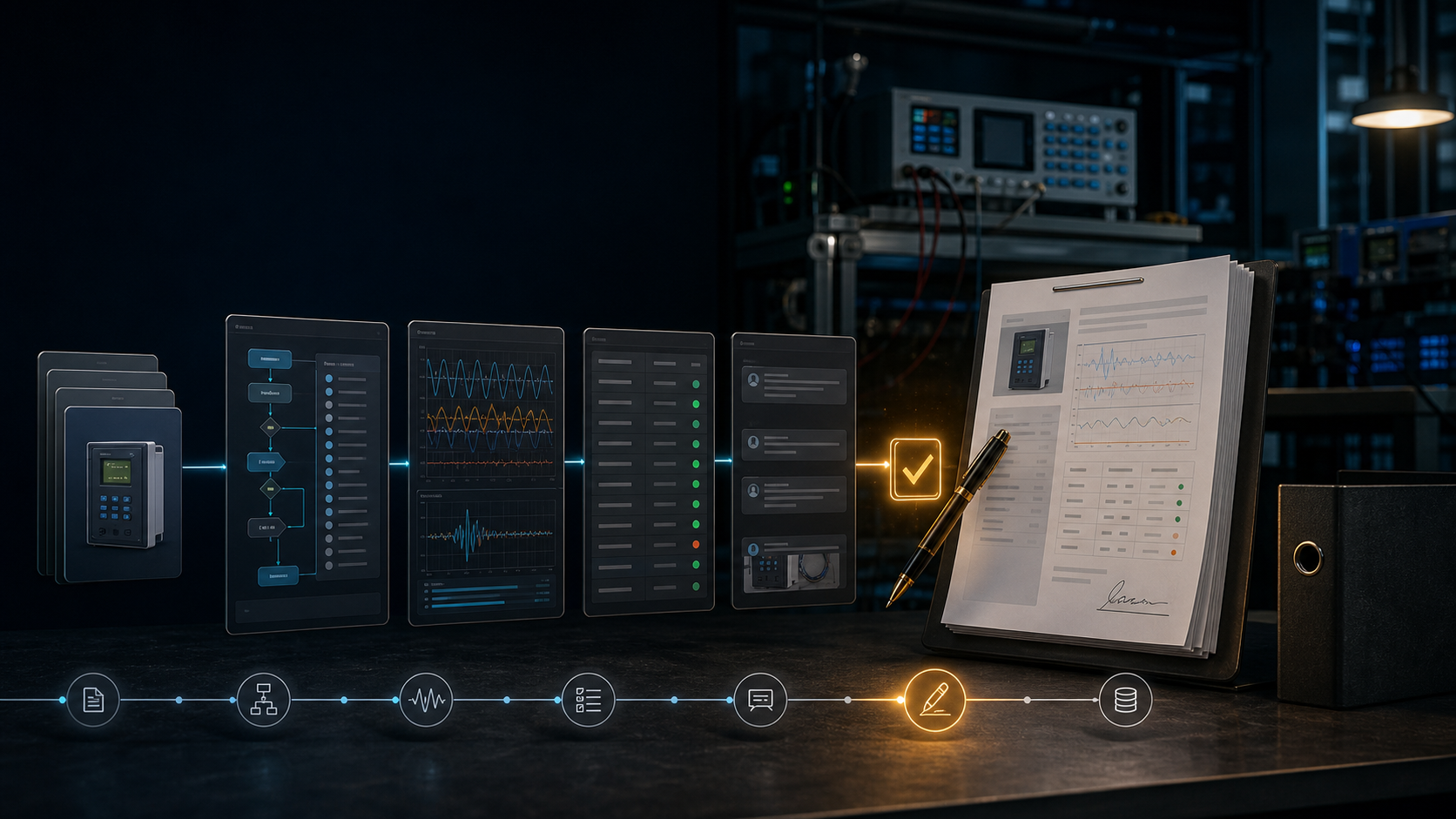
An agentic assistant may reduce search and retyping effort by connecting settings, manuals, test cases, raw traces, and reports. It may also surface missing cases before the outage. The pilot should compare the same records with and without assistance and record false flags and verification time.
ProtectionAI positioning
ProtectionAI can be tested as a planning, simulation, and evidence-review layer. The honest value claim is improved workflow visibility and reduced rework when validated—not a universal percentage or a guarantee of fewer outages.
Measure the cost of uncertainty
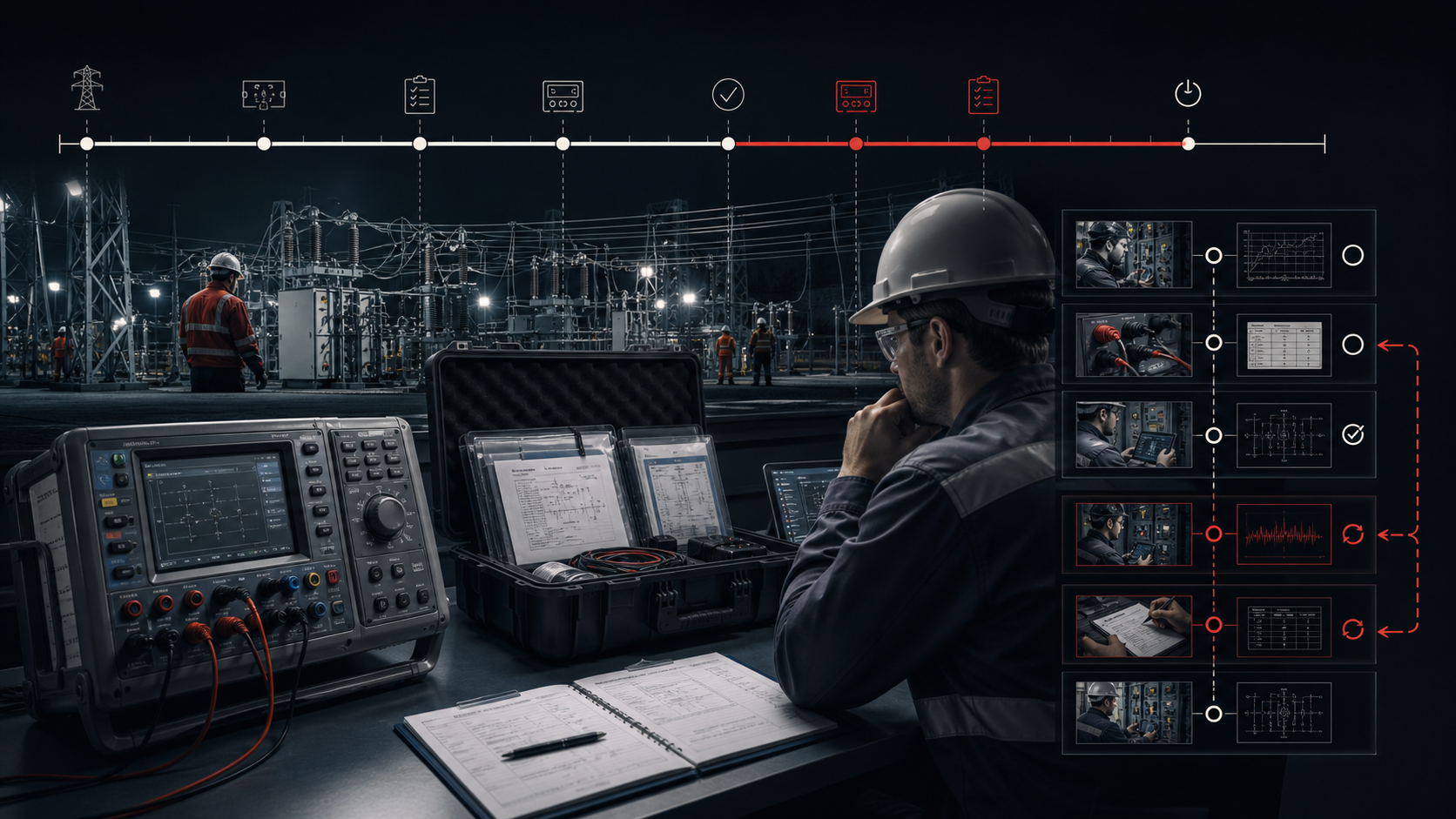
The expensive failure is often discovered before the first injection: a wrong asset identifier, unavailable setting file, missing communication map, or unclear acceptance criterion. During the outage, a wiring correction or missing test case consumes scarce access time. Afterward, an unlinked raw file or ambiguous deviation increases review effort and may force a return visit. A pilot should separate each category so the business case shows where the improvement occurs.
Use a baseline from comparable jobs. Record planned and actual outage duration, preparation hours, field hours, re-test count, travel or mobilisation, reviewer hours, corrections before energisation, and days to retrieve the closed record. For AI assistance, also record false flags, time spent verifying a good flag, and cases where the assistant abstained correctly. A shorter report-generation step is not a saving if it removes evidence or moves work to the reviewer.
A defensible pilot design
Select a representative set of completed jobs with permission to use the records. Blind the reviewer to whether a finding came from the existing process or the assistant. Compare the same evidence with and without the tool, then inspect safety and quality outcomes. Define a stop rule for incorrect recommendations, unsupported claims, or any attempt to cross the OT boundary. Publish the measured sample and limitations alongside the result.
ProtectionAI can help produce a pre-outage evidence manifest, a simulator-first case matrix, and a cited review draft. The value hypothesis is narrower and more useful than a generic productivity promise: engineers spend less time searching and correcting context, while more of their time remains available for engineering judgement.
References
- CIGRE Working Group B5.45. (2015). Acceptance, commissioning and field testing techniques for protection and automation systems (Technical Brochure No. 637). https://www.e-cigre.org/publications/detail/637-acceptance-commissioning-and-field-testing-techniques-for-protection-and-automation-systems.html
- IEEE. (2023). IEEE guide for power system protection testing (IEEE Std C37.233-2023). https://standards.ieee.org/ieee/C37.233/6676/
- North American Electric Reliability Corporation. (2021). State of reliability: An assessment of 2020. https://www.nerc.com/globalassets/programs/rapa/pa/nerc_sor_2021.pdf
- OMICRON. (n.d.). Test Universe [Product page]. https://www.omicronenergy.com/en/products/test-universe/
References
Questions engineers ask
What should a relay-testing business case measure?
Measure pre-test-pack hours, outage coordination, travel and setup, test-set utilization, re-test count, evidence corrections, review time, record retrieval, and the cost of unresolved uncertainty.
Are vendor time-saving percentages enough?
No. Treat them as context until the baseline, module scope, fleet, procedure, and evidence definition are documented and a pilot measures the same workflow locally.
How can ProtectionAI support a pilot?
It can produce a pre-outage evidence manifest, simulator-first case matrix, cited review draft, and exception list; the utility can then measure the workflow against its current process.