DER and IBR Transformer Visibility: Connecting Network Events to Asset Evidence
A practical DER and IBR visibility workflow that links IEC 61850, COMTRADE, protection, inverter behavior, and transformer APM evidence without crossing into autonomous OT control.
On this page
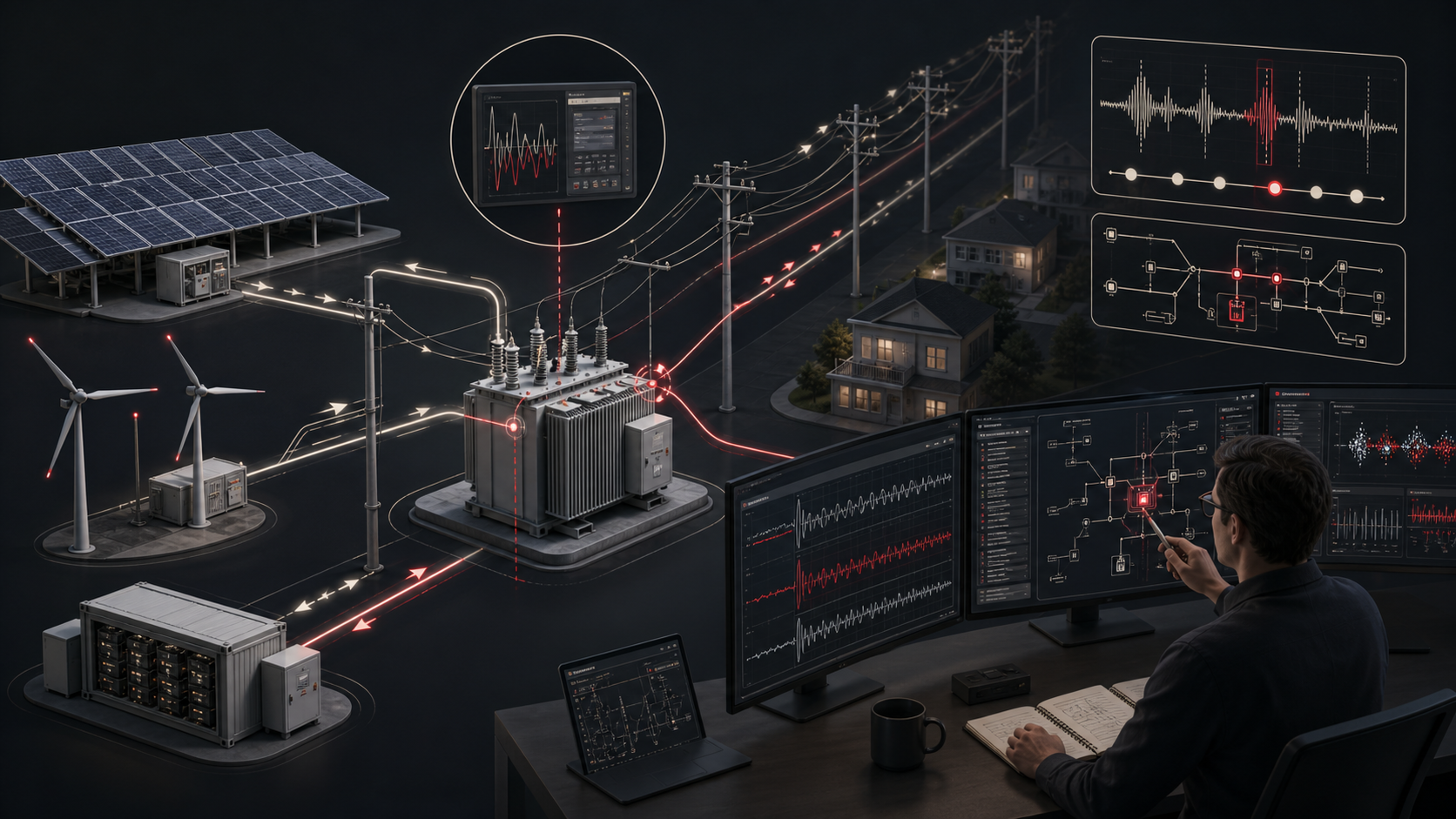
DER and inverter-based resources make transformer visibility a correlation problem. A disturbance record may show current, voltage, frequency, or protection behavior, while the transformer record carries loading, cooling, condition, maintenance, and inspection context. If those records are kept in separate workflows, a team can explain the event without understanding the asset—or inspect the asset without understanding the event.
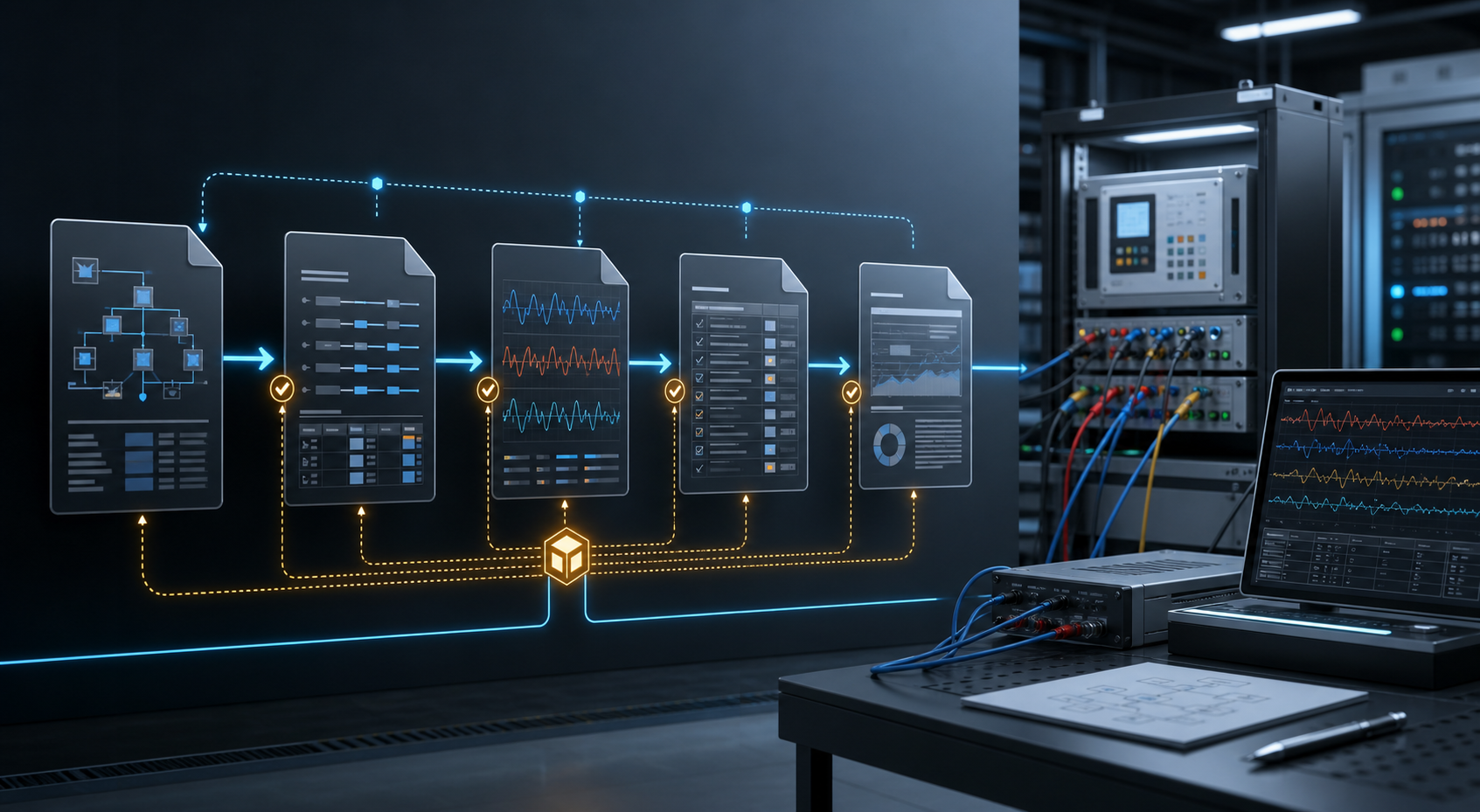
The useful target is an evidence chain: event identity, network state, DER or IBR operating mode, protection response, transformer state, engineering interpretation, and maintenance or commissioning follow-up. The chain is more valuable than a single “AI diagnosis” because each reviewer can see what is known, what is inferred, and what remains outside scope.
Build the event-to-asset chain
Start with a stable event key and preserve the original files. A practical package includes:
- Event time, time source, time zone, station, feeder, bay, transformer, and point-of-interconnection identifiers.
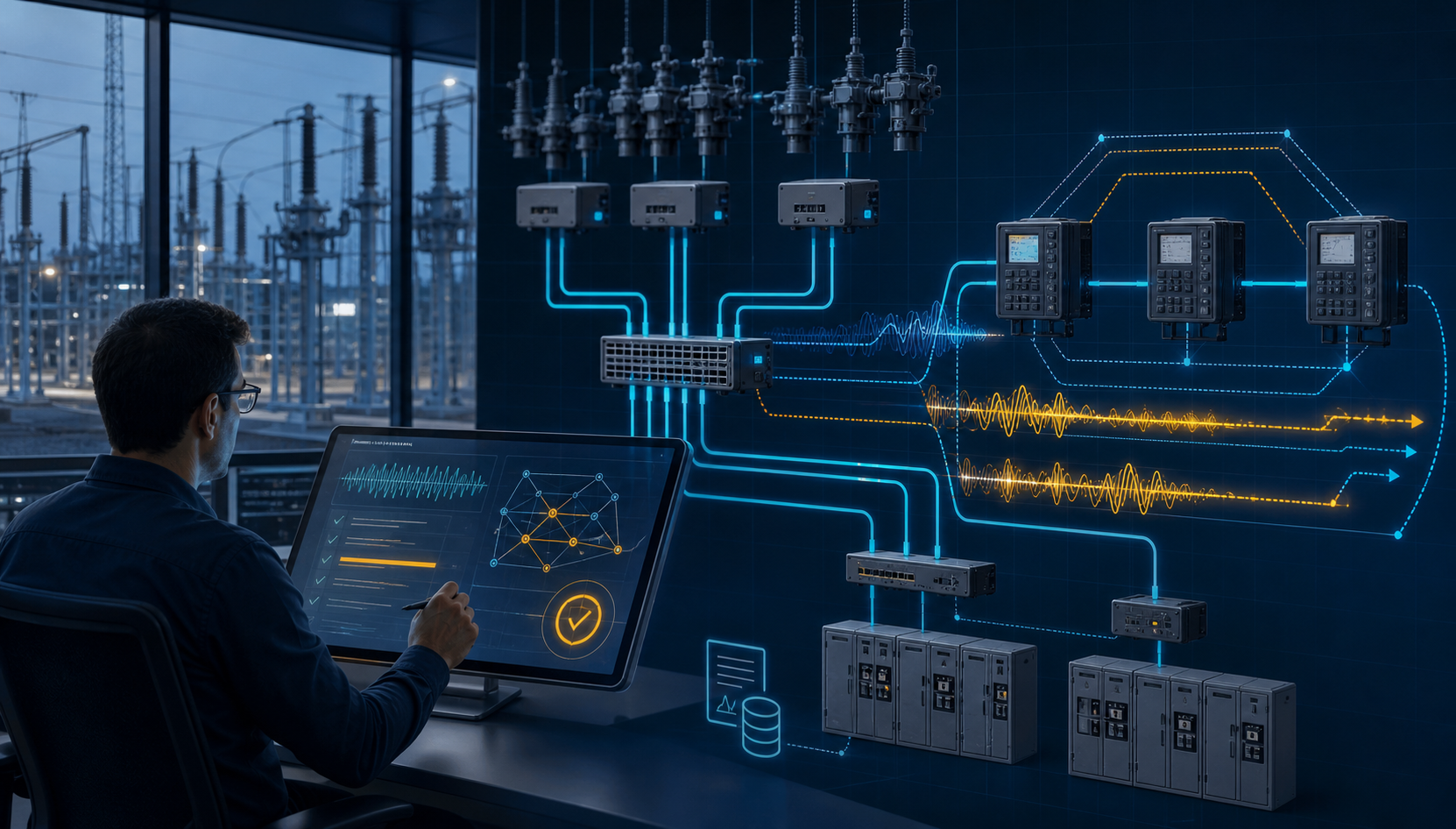
- COMTRADE files, relay targets, sequence-of-events records, inverter or plant-controller logs, and relevant IEC 61850 configuration references.
- Topology, breaker state, switching context, operating mode, ride-through state, and any protection or control setting revision.
- Transformer loading, cooling state, monitor health, recent maintenance, inspection findings, and condition indicators.
- Data-quality notes: missing channels, clock offsets, scaling, dropped records, stale models, or unverified asset mappings.
- Disposition: event classification, alternative explanations, required tests or inspection, owner, approval, and closeout evidence.
IEC 61850-6 is relevant because its configuration description language is intended to exchange IED and system configuration information between engineering tools. IEC TR 61850-10-3 adds a methodical approach to verification and validation of IEC 61850 systems. CIGRE Technical Brochure 949 adds implementation experience for process bus projects. These sources help define what a standards-aware commissioning or event package should reference; they do not make a file exchange proof that the protection scheme operated correctly.
A commissioning and event-review workflow
-
Capture before interpretation. Ingest the original event and configuration records with their source identifiers and integrity checks. Do not normalize away the original channel names, sample rates, quality flags, or time metadata.
-
Resolve topology and identity. Map the event to the correct station, feeder, bay, IBR or DER point of connection, relay, and transformer. If the mapping is uncertain, show the ambiguity and route it for review rather than selecting the most convenient asset.
-
Reconstruct context. Correlate waveform and sequence-of-events data with switching, loading, voltage, control mode, protection settings, plant behavior, and transformer monitor evidence. Keep pre-event, event, and post-event context separate.
-
Check the engineering model. For covered NERC entities and IBRs, PRC-028-1 provides a direct reminder that disturbance data and model validation matter. IEEE 1547 and IEEE 2800 provide additional interconnection and interoperability context for DER and transmission-connected IBRs. The applicable jurisdiction, facility, and standard edition must be determined by the responsible engineering and compliance teams.
-
Test or inspect the hypothesis. A suspected protection issue may need a settings review, replay, functional test, or physical test. A suspected transformer issue may need DGA, thermal, bushing, SFRA, or field inspection evidence. A network event alone should not choose the test.
-
Close the loop. Record the disposition, approved action, as-found and as-left results, model or settings changes, and any new operating limitation. Link the closeout to the asset history and preserve the original event package.
AI support without OT authority
IEEE PES-TR112 discusses practical AI and machine-learning applications in power-system protection and control, but its engineering context reinforces evaluation and human responsibility. CIGRE Technical Brochure 946 similarly treats AI/ML deployment in network operation as a risk-aware journey. For DER and IBR visibility, that means AI can assist with file discovery, channel mapping, evidence summaries, missing-data checks, and reviewer questions. It should not autonomously change settings, send a trip or block command, alter a plant controller, or declare an event resolved.
The protection data interoperability guide and IEC 61850 commissioning article provide detailed adjacent reading. The IBR event evidence guide shows how to keep event records tied to review. For deployment boundaries, use the security and data handling pages.
Where ProtectionAI and AgenticGrid Pro fit
ProtectionAI is Windows desktop protective-relay testing software with an agentic AI copilot. Within documented scope, it can organize settings, test plans, COMTRADE playback or review, SCL/RIO/XRIO evidence, and reports for a human-reviewed protection workflow. It does not drive OMICRON, Doble, Megger, ISA, or EuroSMC hardware; it does not provide on-network GOOSE or Sampled Values control; and it does not replace physical testing or qualified protection engineers.
AgenticGrid Pro is the power-transformer APM workbench. It can help connect event packages to transformer condition, maintenance, and review evidence, but it is not a real-time control system and does not make a final diagnosis or issue OT commands. The responsible protection, operations, commissioning, and asset engineers retain decision authority.
The visibility principle is simple: preserve the event, correlate the asset, test the hypothesis, and approve the action. A complete evidence chain is a better operational handoff than an unexplained confidence label.
References
- CIGRE. (2024). Experience gained and recommendations for implementation of process bus in protection, automation and control systems (Technical Brochure 949). https://www.e-cigre.org/publications/detail/949-experience-gained-and-recommendations-for-implementation-of-process-bus-in-protection-automation-and-control-systems.html
- CIGRE. (2024). The impact of the growing use of machine learning/artificial intelligence in the operation and control of power networks from an operational perspective (Technical Brochure 946). https://www.e-cigre.org/publications/detail/946-the-impact-of-the-growing-use-of-machine-learningartificial-intelligence-in-the-operation-and-control-of-power-networks-from-an-operational-perspective.html
- IEEE Power System Relaying and Control Committee. (2023). Practical applications of artificial intelligence and machine learning in power system protection and control (PES-TR112). https://www.pes-psrc.org/kb/report/117.pdf
- Institute of Electrical and Electronics Engineers. (2018). IEEE standard for interconnection and interoperability of distributed energy resources with associated electric power systems interfaces (IEEE Std 1547-2018). https://standards.ieee.org/ieee/1547/5915/
- Institute of Electrical and Electronics Engineers. (2022). IEEE standard for interconnection and interoperability of inverter-based resources associated with transmission electric power systems (IEEE Std 2800-2022). https://standards.ieee.org/ieee/2800/10453/
- International Electrotechnical Commission. (2022). Communication networks and systems for power utility automation—Part 10-3: Functional testing of IEC 61850 systems (IEC TR 61850-10-3:2022). https://webstore.iec.ch/en/publication/61395
- International Electrotechnical Commission. (2024). Communication networks and systems for power utility automation—Part 6: Configuration description language for communication in electrical substations related to IEDs (IEC 61850-6 consolidated version). https://webstore.iec.ch/en/publication/103863
- North American Electric Reliability Corporation. (2025). PRC-028-1: Disturbance monitoring and reporting requirements for inverter-based resources. https://www.nerc.com/standards/reliability-standards/prc/prc-028-1
References
- NERC PRC-028 NERC PRC-028-1 — Disturbance Monitoring and Reporting Requirements for Inverter-Based Resources
- IEEE 1547 IEEE 1547-2018 — Interconnection and Interoperability of Distributed Energy Resources
- IEEE 2800 IEEE 2800-2022 — Interconnection and Interoperability of Inverter-Based Resources
- IEC 61850-6 IEC 61850-6 Consolidated Version
- IEC 61850 IEC TR 61850-10-3 — Functional Testing of IEC 61850 Systems
- CIGRE Technical Brochure 949 — Process Bus Implementation
- CIGRE Technical Brochure 946 — AI/ML in power network operation and control
- IEEE PES-TR112 — AI/ML in Power System Protection and Control
Questions engineers ask
Does an IBR event prove that a transformer is damaged?
No. An event may reveal a protection, control, measurement, power-quality, or network issue without proving transformer damage. Transformer condition evidence and qualified engineering review are needed to determine the appropriate follow-up.
What should a DER or IBR transformer event package contain?
Include event identifiers, synchronized waveforms, relay and inverter records, operating mode, topology, settings and model versions, transformer loading and condition context, data-quality notes, and the engineering disposition with follow-up actions.
Can ProtectionAI or AgenticGrid Pro operate DER, IBR, or transformer controls?
No. The products can support evidence preparation and human review within documented scope. They do not issue autonomous control commands or replace protection, operations, commissioning, or asset engineering authority.